
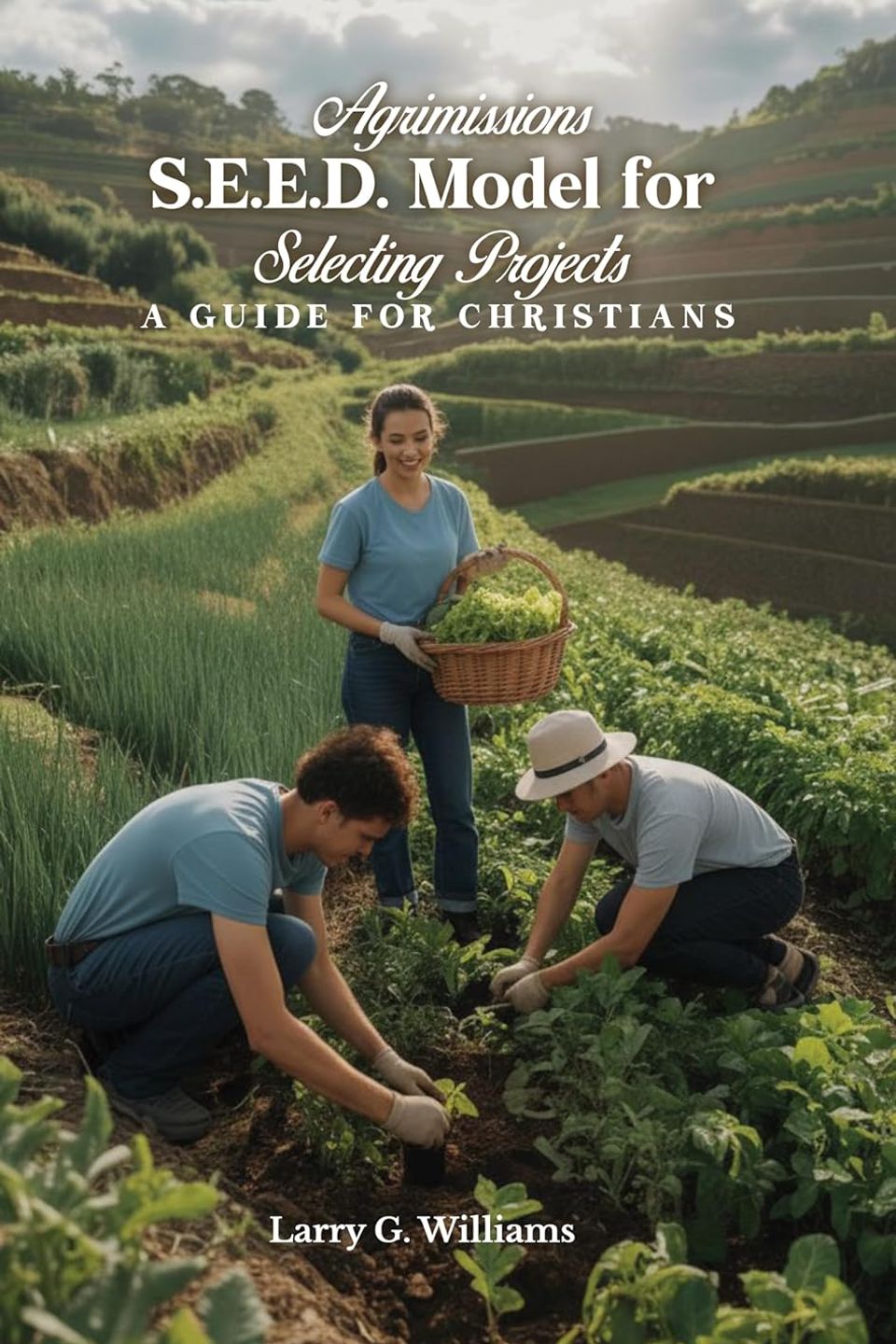
AGRIMISSIONS S.E.E.D. MODEL FOR SELECTING PROJECTS: A GUIDE FOR CHRISTIAN MISSIONS/MISSIONARIES AND SHORT-TERM MISSIONS TEAMS by Larry G. Williams
Good intentions aren't enough. It’s time for missions that last.
Every year, thousands of short-term mission teams travel across the globe to build, teach, and serve. Yet, many of these projects sit abandoned or broken within months of the team’s departure. Why? Because they lacked a foundation of sustainability and local ownership.
In Agrimissions S.E.E.D. Model for Selecting Projects, Larry G. Williams provides a high-impact solution for missionaries, church leaders, and non-profit organizations. Drawing from decades of experience in "agrimissions," Williams outlines a practical, three-phase methodology to ensure that every mission project takes root and thrives.
Readers will learn how to:
Identify Resources: Audit human capital, equipment, and materials before a single brick is laid.
Manage Logistics: Break large jobs into manageable tasks that can be transitioned to local hands.
Empower Locals: Shift from "doing for" to "working with," turning local community members into sustainable leaders.
Build Networks: Support local infrastructure to share resources and technology effectively.
This is more than a guide; it is a call to move beyond "saviorism" and toward true empowerment. Whether you are leading your first short-term trip or are a career missionary, the S.E.E.D. Model will help you plant the seeds of change that result in a harvest for the Kingdom of God.
All proceeds of the sale of this guidebook goes to ministries of Agrimissions.org.
Every year, thousands of short-term mission teams travel across the globe to build, teach, and serve. Yet, many of these projects sit abandoned or broken within months of the team’s departure. Why? Because they lacked a foundation of sustainability and local ownership.
In Agrimissions S.E.E.D. Model for Selecting Projects, Larry G. Williams provides a high-impact solution for missionaries, church leaders, and non-profit organizations. Drawing from decades of experience in "agrimissions," Williams outlines a practical, three-phase methodology to ensure that every mission project takes root and thrives.
Readers will learn how to:
Identify Resources: Audit human capital, equipment, and materials before a single brick is laid.
Manage Logistics: Break large jobs into manageable tasks that can be transitioned to local hands.
Empower Locals: Shift from "doing for" to "working with," turning local community members into sustainable leaders.
Build Networks: Support local infrastructure to share resources and technology effectively.
This is more than a guide; it is a call to move beyond "saviorism" and toward true empowerment. Whether you are leading your first short-term trip or are a career missionary, the S.E.E.D. Model will help you plant the seeds of change that result in a harvest for the Kingdom of God.
All proceeds of the sale of this guidebook goes to ministries of Agrimissions.org.